
Establishing Liability in California Slip-and-Fall Cases: Legal Standards and Defense
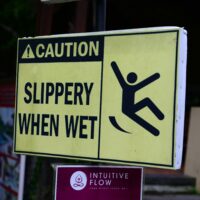
Slip-and-fall litigation in California is frequently misunderstood as a category of cases where liability follows automatically from the occurrence of a fall. That premise is incorrect. California law treats these claims not as a distinct tort, but as a conventional application of negligence principles to conditions of real property. As a result, liability turns on disciplined proof of duty, breach, causation, and damages—most often framed through the lens of property ownership, control, and notice.
For injured plaintiffs and property owners alike, the decisive issues are rarely the occurrence of the fall itself. Instead, the outcome typically depends on whether a dangerous condition existed, whether the defendant created or had notice of that condition, and whether reasonable steps were taken to prevent harm. Equally important are the defenses available under both common law and statute, particularly in cases involving public property.
1. The Governing Framework: Negligence Applied to Property Conditions
California’s foundational rule is codified in Civil Code section 1714, which imposes a general duty to exercise ordinary care in the management of one’s property. Courts consistently interpret this duty as applying to those who own, possess, or control premises. (See Lee v. Starwood Retail Partners, LLC (2022) No. B308224; Fenton v. SafetyPark, Inc. (2017) No. B275230.)
Critically, California courts reject the notion that landowners are insurers of safety. A fall, standing alone, does not establish negligence. As the California Supreme Court emphasized in Ortega v. Kmart Corp. (2001) 26 Cal.4th 1200, liability arises only where the defendant failed to exercise reasonable care under the circumstances.
This framework imposes four essential elements:
- Duty: A legal obligation to maintain reasonably safe premises
- Breach: Failure to meet that standard of care
- Causation: A causal link between the breach and the injury
- Damages: Actual harm suffered by the plaintiff
Among these, breach—particularly in the form of notice—is the most heavily litigated issue in slip-and-fall cases.
2. Dangerous Conditions and the Central Role of Notice
A. Identifying a Dangerous Condition
A plaintiff must first identify a specific dangerous condition—such as liquid on a floor, debris, grease, or an otherwise hazardous surface—and demonstrate that it posed an unreasonable risk of harm. Vague or speculative theories are insufficient.
In Lowell v. Albertson’s LLC (2019) No. B294107, the court underscored that a plaintiff must do more than show they fell; they must connect the fall to a specific condition and establish that it was a substantial factor in causing the injury.
B. Actual vs. Constructive Notice
Where the defendant did not directly create the hazard, liability generally depends on notice:
- Actual notice: The defendant knew of the condition
- Constructive notice: The condition existed long enough, or was sufficiently obvious, that it should have been discovered through reasonable care
Constructive notice is often proven circumstantially. Courts examine factors such as:
- The length of time the condition existed
- The nature and visibility of the hazard
- The proximity of employees
- Whether the condition was recurring or foreseeable
In Scott v. Alpha Beta Co. (1980) 104 Cal.App.3d 305, the court explained that constructive notice may be inferred where a condition would have been discovered through reasonable inspection.
3. Inspections as the Focal Point of Liability
The Supreme Court’s decision in Ortega v. Kmart Corp. remains the controlling authority on inspection duties. The Court held:
- The plaintiff bears the burden of proving notice;
- However, failure to conduct reasonable inspections may support an inference of constructive notice.
This creates a critical evidentiary dynamic. If a defendant cannot show that inspections occurred within a reasonable period before the incident, a jury may infer that the hazard existed long enough to have been discovered.
Subsequent cases reinforce this principle, including Moore v. Wal-Mart Stores, Inc. (2003) 111 Cal.App.4th 472 and Dufaut v. Rancho Coastal Humane Soc’y (2020) No. D075443. These decisions demonstrate that inspection protocols—logs, sweep sheets, employee testimony, and internal policies—often determine the outcome of litigation.
4. Mode of Operation and Foreseeable Risk
Plaintiffs sometimes argue that certain business models—self-service grocery stores, beverage stations, or produce sections—create inherently dangerous conditions. California courts have rejected any rule that eliminates the need to prove notice based solely on a defendant’s “mode of operation.” (Moore, supra; Martinez v. Northgate Gonzalez, LLC (2019) No. G055924.)
However, operational choices are not irrelevant. They inform what constitutes reasonable care. Where a business model increases the likelihood of spills or hazards, ordinary care may require more frequent inspections or enhanced safety measures.
The key distinction is this:
- Mode of operation does not replace notice
- But it shapes the standard of care against which notice and inspections are evaluated
5. Causation: Linking Condition to Injury
Even where a hazardous condition is established, the plaintiff must prove it caused the fall. This requirement is often underestimated.
Courts routinely reject claims where:
- The plaintiff cannot identify what caused the fall
- Multiple potential causes exist without evidentiary support
- The alleged hazard is defined too broadly or abstractly
For example, in Martinez, the court rejected an attempt to characterize the floor itself as inherently dangerous where the evidence pointed instead to a temporary spill.
This underscores a practical point: precision in defining the hazard is essential to both proof and defense.
6. Claims Against Public Entities: A Statutory Framework
Slip-and-fall claims involving public property are governed not by common law alone, but by the California Government Claims Act, specifically Government Code section 835.
To establish liability, a plaintiff must prove:
- The property was in a dangerous condition
- The condition proximately caused the injury
- The risk was reasonably foreseeable
- Either:
- A public employee created the condition, or
- The entity had actual or constructive notice
(See Cal. Gov’t Code § 835.)
A. Defining “Dangerous Condition”
A “dangerous condition” is one that creates a substantial (not trivial) risk of injury when used with due care. (Cal. Gov’t Code § 830.)
B. Notice and Inspection Systems
Section 835.2 explicitly ties constructive notice to the adequacy of inspection systems. Public entities may defeat liability by demonstrating:
- A reasonably adequate inspection system existed; and
- It was operated with due care
C. Statutory Defenses
Public entities possess additional defenses not available in the same form to private defendants:
- Trivial defect doctrine (Gov. Code § 830.2): Minor conditions are not actionable as a matter of law
- Reasonableness defense (Gov. Code § 835.4): Liability is avoided if the entity’s conduct was reasonable under a risk-benefit analysis
These statutory protections create a more structured—and often more demanding—path for plaintiffs.
7. Common Defense Strategies in Slip-and-Fall Litigation
1. Lack of Notice
This is the most frequently asserted defense. If the defendant can show:
- Regular inspections occurred; and
- No hazard was observed shortly before the incident
then constructive notice becomes difficult to establish.
2. No Dangerous Condition
Defendants may argue that:
- The condition was not unreasonably dangerous; or
- The plaintiff cannot identify the cause of the fall
3. Reasonable Care
Evidence of:
- Inspection protocols
- Employee training
- Cleanup procedures
- Warning systems
may demonstrate compliance with the duty of ordinary care.
4. Comparative Fault
California follows a system of pure comparative negligence. (Cal. Civ. Code § 1714.) Liability may be reduced where the plaintiff contributed to the incident through:
- Inattention
- Disregard of warnings
- Unsafe footwear
- Distracted behavior
5. Lack of Control
Liability requires ownership, possession, or control. Defendants frequently challenge whether they had sufficient control over the area where the incident occurred.
8. Important Doctrinal Limits and Clarifications
A. Creation of the Hazard
Where the defendant created the dangerous condition, the notice requirement becomes less significant. The defendant’s own conduct establishes breach.
B. Res Ipsa Loquitur
The doctrine of res ipsa loquitur generally does not apply in ordinary slip-and-fall cases. (Ortega, supra.) Plaintiffs must affirmatively prove the elements of negligence.
C. Visitor Status
Modern California law places less emphasis on rigid classifications such as “invitee” or “licensee.” The focus remains on reasonableness, control, and foreseeability, rather than formal status distinctions.
9. Practical Implications for Litigants
Slip-and-fall cases are evidence-driven. The outcome often turns on documentation and timing:
- For plaintiffs: Early investigation is critical—photographs, witness statements, and incident reports may determine whether notice can be established.
- For defendants: Consistent inspection records and well-implemented safety protocols are often the strongest defense.
In both contexts, the litigation frequently centers not on what happened, but on what can be proven about the condition of the property and the defendant’s response to risk.
Conclusion
California slip-and-fall liability is grounded in traditional negligence principles, not presumptions of fault. A plaintiff must establish that a dangerous condition existed and that the defendant either created it or had actual or constructive notice in time to take corrective action. The analytical framework articulated in Ortega v. Kmart Corp. and its progeny continues to govern, placing inspection practices and notice at the center of most disputes.
For public property claims, the statutory requirements of Government Code section 835 introduce additional elements and defenses, including triviality and reasonableness, which can significantly alter the litigation landscape.
Ultimately, these cases turn on disciplined factual development and careful application of California law. Whether asserting or defending a claim, success depends on the ability to connect legal standards to concrete evidence of how the property was maintained, inspected, and managed.
Contact the Law Offices of Andrew Ritholz Inc
Slip-and-fall cases require more than a surface-level understanding of premises liability. They demand a precise analysis of notice, inspection practices, and the evidentiary record. The Law Offices of Andrew Ritholz Inc approaches these matters with a litigation-focused strategy grounded in California law and courtroom experience.
If you are evaluating a potential claim or defending against one, contact the firm to discuss the legal and factual issues that will shape the outcome of your case.

